
Guide on lampante olive oil
At Olivarte, we strive every day to select the best extra virgin olive oils, and part of our work involves thoroughly understanding all the categories of oil that exist, including those that are not suitable for consumption: the lampante oil.
You may have heard about it at some point and wondered what lampante oil is. If so, keep reading because at Olivarte we’ll explain it to you, with special emphasis on why it should never be marketed as food. Let’s begin.
What is lampante oil?
The first thing to know is that lampante oil is a type of olive oil not suitable for human consumption because it has serious defects in its smell, taste, or chemical composition.
If you’ve ever wondered what lampante olive oil is, the answer is clear: it is a virgin olive oil that does not meet the minimum requirements to be classified as virgin or extra virgin.
Its name comes from a very specific historical use. For centuries, this oil was used as fuel for oil lamps, hence the term “lampante.” This origin partly explains the meaning of lampante oil: a useful oil, yes, but not for eating. And it’s very important that this is clear.
If we look for a definition of lampante oil that is more technical, we can say that it is an oil that presents one or more of these problems:
- High acidity: above 2%.
- Intense sensory defects detected by a tasting panel (smell of mold, fusty, winey, rancid, or dampness).
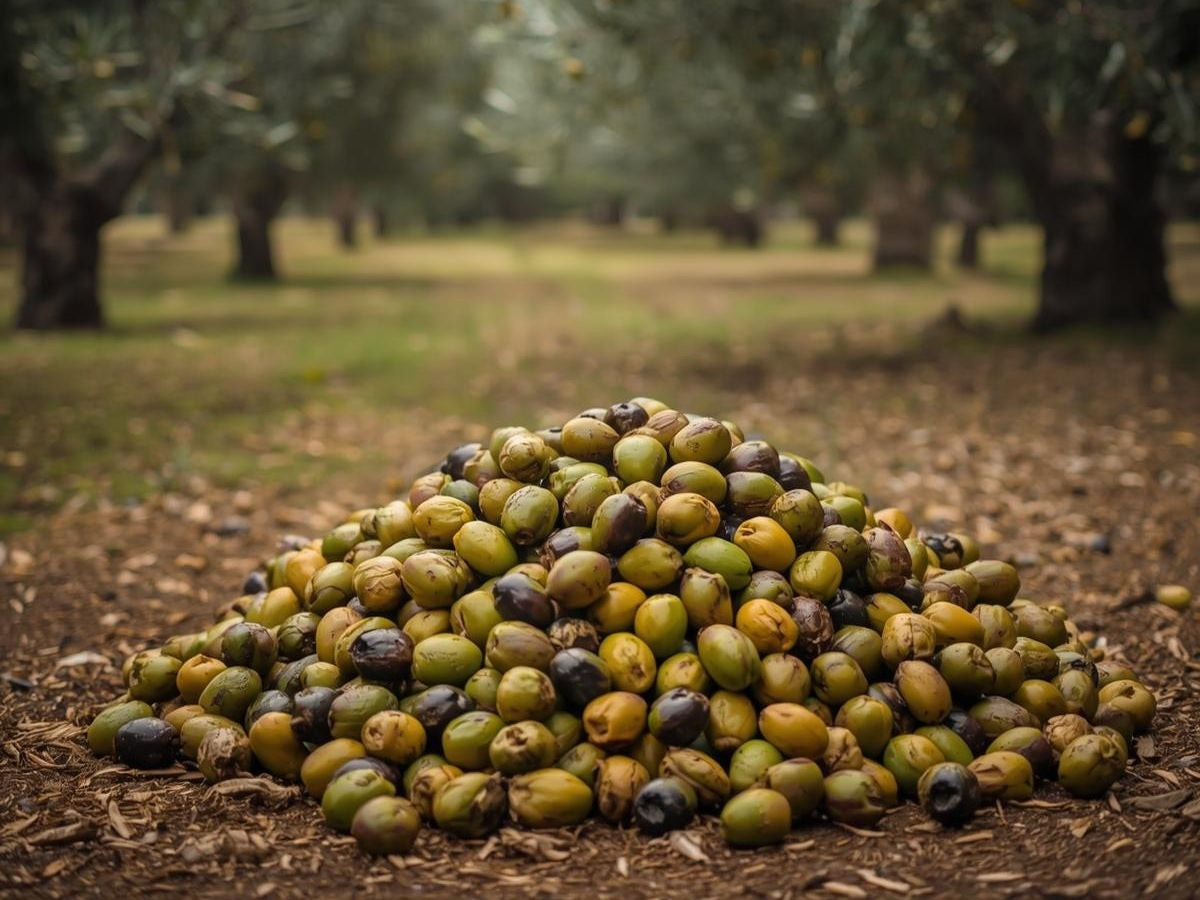
- Poor condition of the olive at the time of extraction (olives fallen to the ground, frozen, or stored in poor conditions).
- Deficient production processes, with prolonged times between harvesting and milling.
These defects are so pronounced that the oil cannot be classified as virgin, much less as extra virgin. That’s why, lampante oil means, literally, that it is an oil that “does not ignite” in terms of quality, although historically it was indeed used to light lamps.
Can lampante oil be consumed?
One of the most common questions is: can lampante oil be consumed? The answer is NO, at least not in its original state.
As established by European regulations, lampante oil cannot be sold for food use. It must first undergo an industrial refining process, during which odors, flavors, and chemical defects are removed. The result of this refining is a neutral oil, practically without aroma or flavor, which is usually blended with a small percentage of virgin oil to be marketed as olive oil (the kind we find in supermarkets labeled as mild or intense olive oil).
Therefore:
- Lampante olive oil is NOT consumed directly.
- It does not reach the consumer as it comes out of the mill.
- It is only used as a base to make refined oils.
What is done with lampante oil?
Now that we know what it is, you might be wondering what is done with lampante oil once it is produced. At Olivarte, we always emphasize that its main function is to serve as raw material for the refining industry. From it, the following is obtained:
- Refined olive oil, without flavor or odor.
- Commercial blends known as “olive oil”, which combine refined oil with a small percentage of virgin oil.
Therefore, although it is not suitable for direct consumption, it does play an important role as a base for certain food products.
And, what is lampante oil used for? This is what it has been used for throughout history:
- For lighting in household lamps.
- As fuel in different systems.
- For industrial or artisanal uses, such as soaps or lubricants.
However, nowadays, if you are wondering what lampante oil is used for currently, the reality is that it is almost exclusively limited to the industrial refining of oil. Its use as food is completely prohibited unless it first goes through that process.
Why does lampante oil exist?
As EVOO experts, at Olivarte we believe that the reasons why lampante oil exists are:
- Olives in poor condition:
When olives are picked from the ground, they are overripe or have suffered frost, and they develop defects that are transferred to the oil.
- Delays in milling:
Once removed from the tree, the olive must be milled within a few hours. If it is stored for too long, it ferments and generates defective flavors.
- Careless production:
Poor temperature control, faulty machinery, or contaminated tanks also result in defective oils.
- Adverse weather conditions:
Excess moisture or a difficult harvest can result in lower quality batches.
Lampante oil VS extra virgin olive oil
At Olivarte we believe that understanding what lampante oil is allows you to appreciate even more the extraordinary quality of EVOO. While lampante has serious defects, extra virgin:
- Is obtained only by mechanical procedures.
- Has no defects in tasting.
- Has clean, fruity, and balanced aromas.
- Comes from healthy and early-harvested olives.
At Olivarte we work exclusively with extra virgin olive oils and premium oils from producers who take care of every stage of the process.



Leave a comment
This site is protected by hCaptcha and the hCaptcha Privacy Policy and Terms of Service apply.