
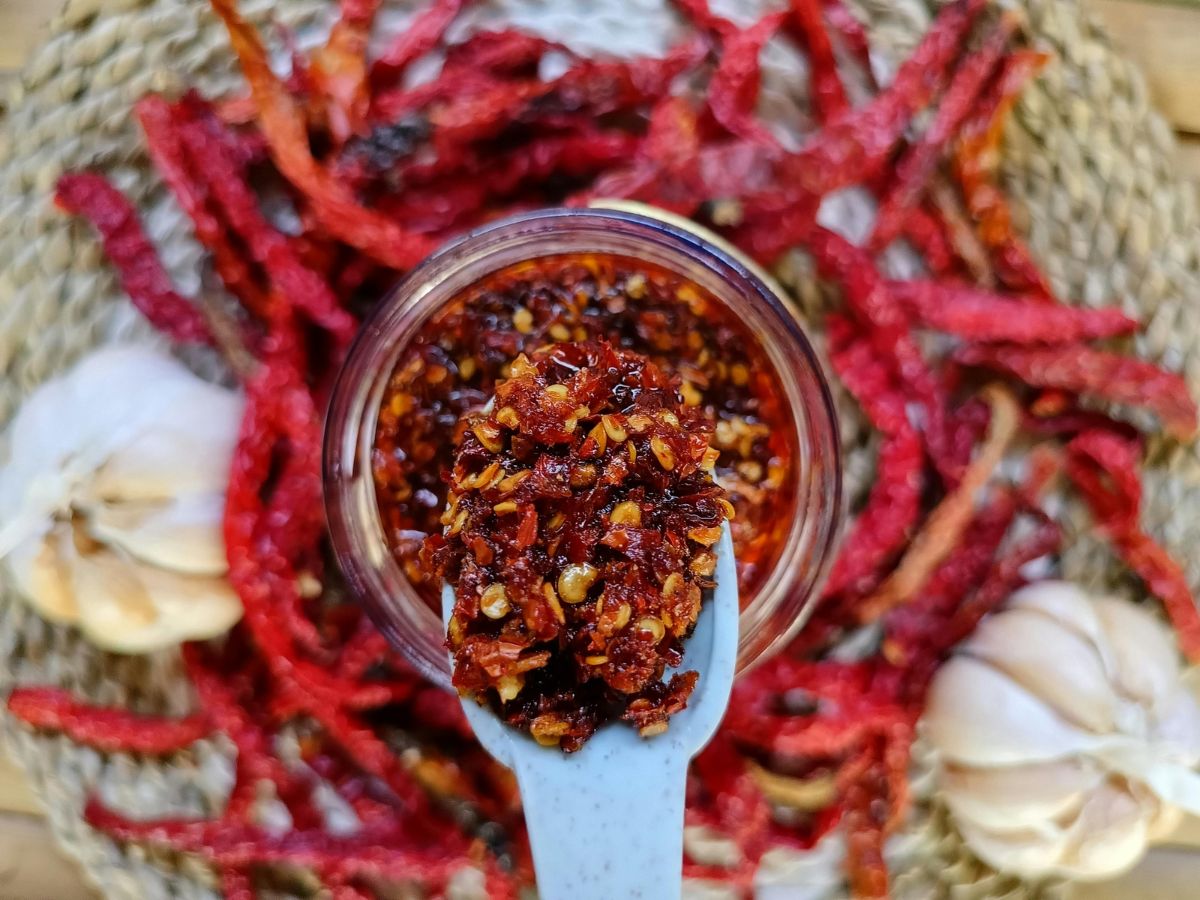
Spicy Oil: Uses and How to Prepare It
Spicy oil is one of those simple condiments that can completely transform a dish. Just a teaspoon over pizza, pasta, vegetables, or toast adds intensity, aroma, and a touch of heat.
Its base is usually a good olive oil, to which chili peppers, dried chiles, cayenne, spices, or aromatic ingredients are added. The result can be mild, intense, smoky, crunchy, or very spicy, depending on the type of chile and the preparation method.
Spicy oil is not just for “adding heat.” When well prepared, it adds depth, rounds out simple recipes, and helps personalize dishes without complications. However, it should be prepared carefully, especially if using fresh ingredients like garlic, herbs, or fresh chilies.
What is spicy oil?
Spicy oil is an oil flavored with ingredients that provide heat. It is usually made with extra virgin olive oil and some type of chili pepper or chile, although it can also include garlic, pepper, paprika, ginger, sesame, fried onion, or other spices.
The intensity depends on several factors: the variety of chile, whether it is used fresh or dried, the amount, the maceration time, and the infusion temperature. A dried chili can give a clean, Mediterranean heat. An Asian chile can add more roasted or smoky notes. And a chili crisp adds texture, not just spiciness.
Extra virgin olive oil works very well as a base because it adds body, flavor, and its own nuances. If you’re looking for a balanced spicy oil, it’s best to choose an EVOO that doesn’t overpower the chile’s aromas. An arbequina can give a milder, rounder result, while a picual or hojiblanca brings more character.
Types of spicy oils according to cuisine
Spicy oil exists in many cuisines. The chiles, spices, and uses may change, but the idea is the same: extract flavor and heat into a fat to use as a condiment.
Italian Style
Italian-style spicy oil is one of the best-known in Europe. It is usually made with olive oil and dried peperoncino. It’s common to find it in pizzerias, trattorias, and recipes from southern Italy.
It has a simple profile: oil, dried chili, and sometimes garlic or Mediterranean herbs. Its function is to enhance dishes like pizza, focaccia, pasta, eggplants, cheese, or toasted bread.
For this style, it’s best to use dried chili or crushed dried chile. It adds heat without adding moisture to the oil, which improves preservation and reduces risks.
Asian Style (Chili Oil)
Asian chili oil is usually more spiced and aromatic. It is common in cuisines such as Chinese, Japanese, or Southeast Asian. It can include chili flakes, hot oil, garlic, ginger, star anise, cinnamon, Sichuan pepper, sesame, or soy sauce in more complex preparations.
Unlike Italian spicy oil, here the goal is not just heat. Toasted aroma, depth, and a spiced touch are also sought. It is used in noodles, rice, soups, dumplings, stir-fried vegetables, meats, and marinades.
If you prepare it with olive oil, it's best to choose a mild EVOO so it doesn't overpower the spices.
"Chili Crisp" or Crunchy Style
Chili crisp is a denser and more textured version. It's not just spicy oil: it includes crunchy ingredients like fried garlic, fried onion, seeds, peanuts, sesame, or chili flakes.
Its appeal lies in the combination of oil, heat, and crunchy bite. It works very well on eggs, rice, toast, vegetables, meats, fish, hummus, or even roasted potatoes.
The important point is safety and preservation. Since it contains more ingredients, especially if they are fresh or not well dehydrated, you must be extra careful with hygiene, refrigerate, and consume within a few days.
How to Make Spicy Oil
There are two main ways to make spicy oil at home: cold and hot. The cold method is slower and milder. The hot method is faster and more intense.
In both cases, it is advisable to use clean containers, dry ingredients, and quality oil. If you use fresh chilies, fresh garlic, or fresh herbs, the oil should be stored in the fridge and consumed soon.
Cold Method (Slow Maceration)
Cold maceration consists of placing dried chilies in oil and letting them release aroma and heat over several days.
Basic ingredients:
-
250 ml of extra virgin olive oil.
-
2 or 3 dried chilies.
-
1 teaspoon chili flakes, optional.
-
A clean glass jar or bottle.
Preparation:
-
Wash and dry the container thoroughly.
-
Place the dried chilies inside.
-
Add the extra virgin olive oil.
-
Seal the container.
-
Let it sit for 7 to 15 days in a cool, dark place.
-
Taste the oil and adjust the heat if necessary.
This method yields a cleaner and more elegant oil. It is ideal for pizzas, focaccias, pasta, and toast. If you want to reduce the risk of rancidity, make a small amount and consume it within a reasonable time.
Hot Method (Quick Infusion)
The hot method consists of gently heating the oil to extract the chili flavors more quickly. It is faster, but requires careful temperature control.
Basic ingredients:
-
250 ml of extra virgin olive oil.
-
1 tablespoon of dried chili flakes.
-
1 or 2 dried chili peppers.
-
Sweet or smoked paprika, optional.
-
Pepper or seeds, optional.
Preparation:
-
Heat the oil over low heat.
-
Add the dried chili and spices.
-
Keep the oil hot for a few minutes, without letting it smoke.
-
Remove from the heat.
-
Let it rest until it cools down.
-
Strain or keep with the solids, depending on the desired texture.
The oil should not burn. If the chili is toasted too much, it becomes bitter. If the oil smokes, it loses quality. The temperature should be gentle, enough to infuse, not to fry.
Health benefits of spicy oil
Spicy oil can be part of a balanced diet, but it should not be sold as a remedy. Its interest lies in combining the properties of extra virgin olive oil with the natural compounds of chili, such as capsaicin.
Capsaicin is the substance responsible for the heat in chilies. It has been studied for its possible relationship with antioxidant, anti-inflammatory, and metabolic effects, although many benefits depend on the dose, individual tolerance, and the context of the diet.
In addition, spiciness can help reduce the need to add heavier sauces or excess salt, because it provides intensity with a small amount. A teaspoon can transform a simple dish without adding too much fat.
Even so, not everyone tolerates it the same way. People with reflux, gastritis, digestive sensitivity, or intestinal problems may feel discomfort with spicy foods. In those cases, it is advisable to moderate the amount or avoid it.
Ideal uses for spicy oil
Spicy oil works best as a finishing touch. There is no need to add much. In fact, if used in excess it can overpower the flavor of the dish.
Pizzas and focaccias
This is one of its most classic uses. A drizzle of spicy oil over a freshly made pizza adds aroma, shine, and a touch of heat. It also goes very well over focaccias with rosemary, olives, sun-dried tomatoes, or cheese.
Toast and appetizers
On toast, spicy oil pairs well with tomato, avocado, fresh cheese, anchovies, hummus, escalivada, or cured meats. It can also be served as a dip with bread, olives, or roasted vegetables.
For appetizers, just mix it with olives, nuts, or aged cheese. The result is quick and very flavorful.
Pasta dishes
In pasta, spicy oil can replace a complex sauce. It works especially well with garlic, tomato, basil, parmesan, seafood, or sautéed vegetables.
A plate of spaghetti with olive oil, chili pepper, and garlic is a clear example: few ingredients, but a lot of character. If you use extra virgin olive oil, the result gains aroma and depth.
Grilled vegetables and meats
Spicy oil also goes well with grilled vegetables like zucchini, eggplant, pepper, asparagus, or mushrooms. Add it at the end, off the heat, to better preserve the aroma.
For grilled meats, it can be used on chicken, pork, beef, or homemade burgers. It also works with fatty fish, octopus, shrimp, or skewers.
In summary, spicy oil is a versatile condiment, easy to prepare, and very useful for giving personality to everyday dishes. If you choose a good extra virgin olive oil, use dried chilies, and control the preservation, you'll have a kitchen staple full of flavor.
The key is to keep it simple: good EVOO, good chili, and common sense with food safety.

Leave a comment
This site is protected by hCaptcha and the hCaptcha Privacy Policy and Terms of Service apply.