
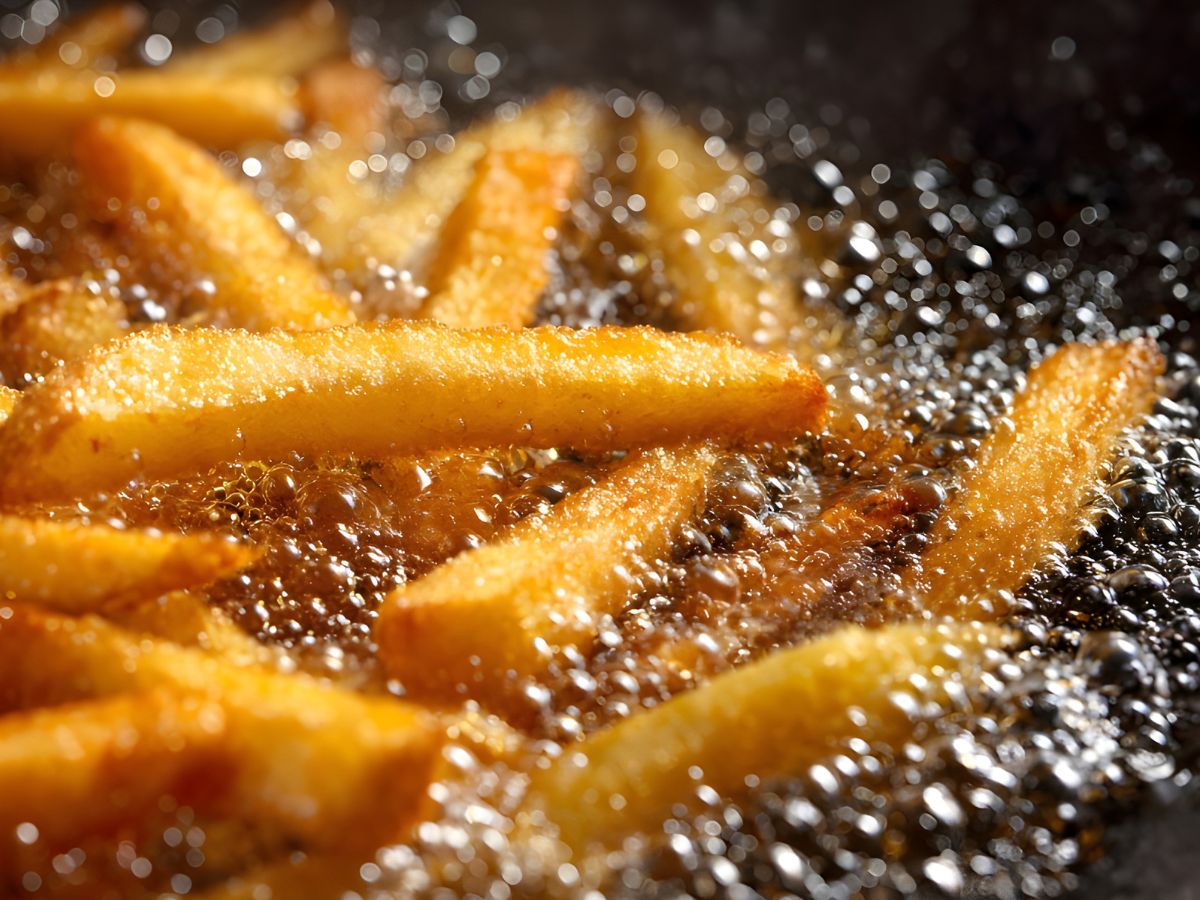
Which Oil Is Best For Frying In The Kitchen?
The best oil for frying in the kitchen is not simply the one with the highest smoke point. That idea is often repeated, but it falls short. To choose well, you need to consider three aspects: the temperature the oil can withstand, its stability against oxidation, and its nutritional composition.
With that criteria, extra virgin olive oil is one of the best options for frying at home. It withstands the usual frying temperatures well, has a composition rich in monounsaturated fats, and provides natural antioxidants. In addition, it enhances the flavor of many foods and allows you to achieve crispy fries when used correctly.
That does not mean that any fried food is healthy just because olive oil is used. Technique also matters. Temperature, cooking time, oil reuse, and the type of food greatly influence the final result.
Key factors for choosing the best oil
To know which oil is best for frying, it's best to look beyond price or habit. Some oils may seem suitable because they are mild or cheap, but they degrade more easily when exposed to high temperatures.
The main factors are smoke point, oxidative stability, and fat profile. When an oil performs well in these three areas, it offers safer, more stable, and tastier frying.
Oil smoke point
The smoke point is the temperature at which the oil starts to produce visible smoke. When this happens, the oil is degrading and unpleasant flavors, loss of quality, and unwanted compounds can appear.
In home frying, the temperature is usually between 160 and 180 °C. Therefore, a good oil for frying should remain stable within that range. Olive oil has a sufficient smoke point for this use, as long as it is not overheated or allowed to burn.
Even so, the smoke point should not be the only criterion. An oil may have a high smoke point and, at the same time, oxidize easily if its composition is less stable. That's why you need to look at the whole picture.
Oxidative stability of oil
Oxidative stability measures the oil's resistance to oxygen, light, heat, and the passage of time. In frying, this stability is key because the oil is heated for several minutes and comes into contact with air and the water in foods.
Oils rich in monounsaturated fats, such as olive oil, usually perform better than oils with a high content of polyunsaturated fats. In addition, extra virgin olive oil contains phenolic compounds and other natural antioxidants that help protect the oil during heating.
This does not mean that EVOO is indestructible. If it is overheated, reused many times, or stored poorly, it also loses quality. But it starts with a more interesting composition for cooking at medium and high temperatures.
Health and natural composition of oil
From a nutritional point of view, it is important to choose oils with low saturated fat content and a good presence of unsaturated fats. Extra virgin olive oil stands out for its high content of oleic acid, a monounsaturated fat characteristic of the Mediterranean diet.
In addition, unlike many refined oils, EVOO is obtained by mechanical procedures and retains natural components of the olive. This gives it flavor, aroma, and greater nutritional complexity.
For frying, this has a double advantage: good stability in the kitchen and a better nutritional profile than less recommended fats, such as butter, lard, or highly refined low-quality oils.
Which oil is better for frying, olive oil or sunflower oil?
Between olive oil and sunflower oil, olive oil is usually a better option for frying, especially if we are talking about extra virgin olive oil or good quality olive oil.
Conventional sunflower oil has a high content of polyunsaturated fats. These fats are interesting in the diet, but they are more sensitive to heat. That is why, when used for frying, it can oxidize sooner than an oil rich in monounsaturated fats.
Olive oil, on the other hand, has more oleic acid and superior stability during frying. It also adds flavor, which can be an advantage in foods like potatoes, croquettes, vegetables, fish, or meats.
There is one important exception: high-oleic sunflower oil. This type of sunflower has been selected to have more oleic acid, so it withstands frying better than conventional sunflower oil. Even so, if we are looking for flavor, gastronomic tradition, and nutritional quality, extra virgin olive oil remains a very complete option.
Is frying with sunflower oil bad?
Frying with sunflower oil is not “bad” in itself. The problem lies in the type of oil, the temperature, and the frequency of use.
If conventional sunflower oil is used for long fryings, at high temperatures, or reused many times, the oil can degrade more easily. In that case, the quality of the frying worsens and the food absorbs a less interesting oil.
For occasional use, sunflower oil can work. But if you fry with some frequency, it is advisable to choose more stable oils, such as olive oil or high-oleic sunflower oil. It is also important not to fall into alarmist messages: seed oils are not poison, but not all behave the same in a frying pan.
Advantages of frying with extra virgin olive oil
Frying with extra virgin olive oil has several advantages. The first is its stability. It withstands the usual frying temperatures well and better maintains its qualities when used correctly.
The second is the flavor. A good EVOO provides fruity, grassy, or slightly bitter and spicy notes, depending on the variety. This can improve simple recipes such as fried eggs, potatoes, eggplants, peppers, fish, or fried dough.
The third advantage is its composition. Extra virgin olive oil contains mainly monounsaturated fats and antioxidant compounds characteristic of the olive. This makes it a very versatile culinary fat, suitable both for use raw and for cooking.
Why fry with extra virgin olive oil?
It is advisable to fry with extra virgin olive oil because it combines stability, flavor, and nutritional quality. It is not only good for salads or toast. It also works well in the pan, for sautés, and for home frying.
Additionally, EVOO helps form a crispy surface on food when the temperature is right. If the oil is cold, the food absorbs more fat. If it is too hot, it burns on the outside and is poorly cooked on the inside. The key is to maintain a controlled temperature.
For frying with a large volume of oil, you can choose a milder-profile EVOO or an olive oil intended for daily cooking. For recipes where the oil adds a lot of flavor, an extra virgin from varieties like picual, hojiblanca, or arbequina can make a difference.
Tips for frying with olive oil
Frying well is not just about filling a pan with oil. The technique determines whether the result will be light, crispy, and tasty or heavy and greasy.
Ideally, use enough oil so that the food cooks evenly. It is also advisable to dry foods well before frying them, because excess water causes splattering and accelerates the deterioration of the oil.
Another important point is not to mix different oils. Each oil has a different composition and behavior when heated. If you mix used oil with new oil, you worsen the overall quality.
What is the healthiest oil for frying?
For home frying, one of the healthiest oils is extra virgin olive oil. It has good stability, a favorable fat profile, and natural antioxidants. In addition, it is part of the Mediterranean dietary pattern, where olive oil is the main fat.
Refined olive oil or high-oleic sunflower oil can also be valid options, especially if you are looking for a more neutral flavor or a lower cost. But if we are talking about a balance between health, flavor, and quality, EVOO is the most recommended choice.
That said, oil does not turn fried food into a dish to eat every day. Fried foods should have a moderate place in the diet. It is better to use good oil, control the temperature, and combine this type of preparation with vegetables, legumes, fish, fruits, and dishes cooked with less fat.
Good practices for better frying
To achieve higher quality frying, follow these recommendations:
-
Keep the oil between 160 and 180 °C.
-
Do not let the oil smoke.
-
Dry foods before frying them.
-
Fry in small batches to avoid lowering the temperature.
-
Remove any flour, breadcrumbs, or dough residue between batches.
-
Do not reuse the oil too many times.
-
Discard the oil if it is dark, thick, foamy, or smells bad.
-
Filter the oil if you are going to reuse it.
-
Store it in a clean, closed container away from light.
-
Do not mix new oil with heavily used oil.
In summary, the best oil for frying in the kitchen is one that withstands heat well, oxidizes little, and has a good nutritional composition. Extra virgin olive oil meets these requirements and, in addition, provides flavor and culinary value.
Frying with EVOO is not a waste if used wisely. On the contrary: it can improve the result of many recipes and offer more stable frying than other commonly used oils. The key is to choose a good oil, control the temperature, and not overdo fried foods.

Leave a comment
This site is protected by hCaptcha and the hCaptcha Privacy Policy and Terms of Service apply.