
Oleanolic Acid: What It Is and What It Is Used For
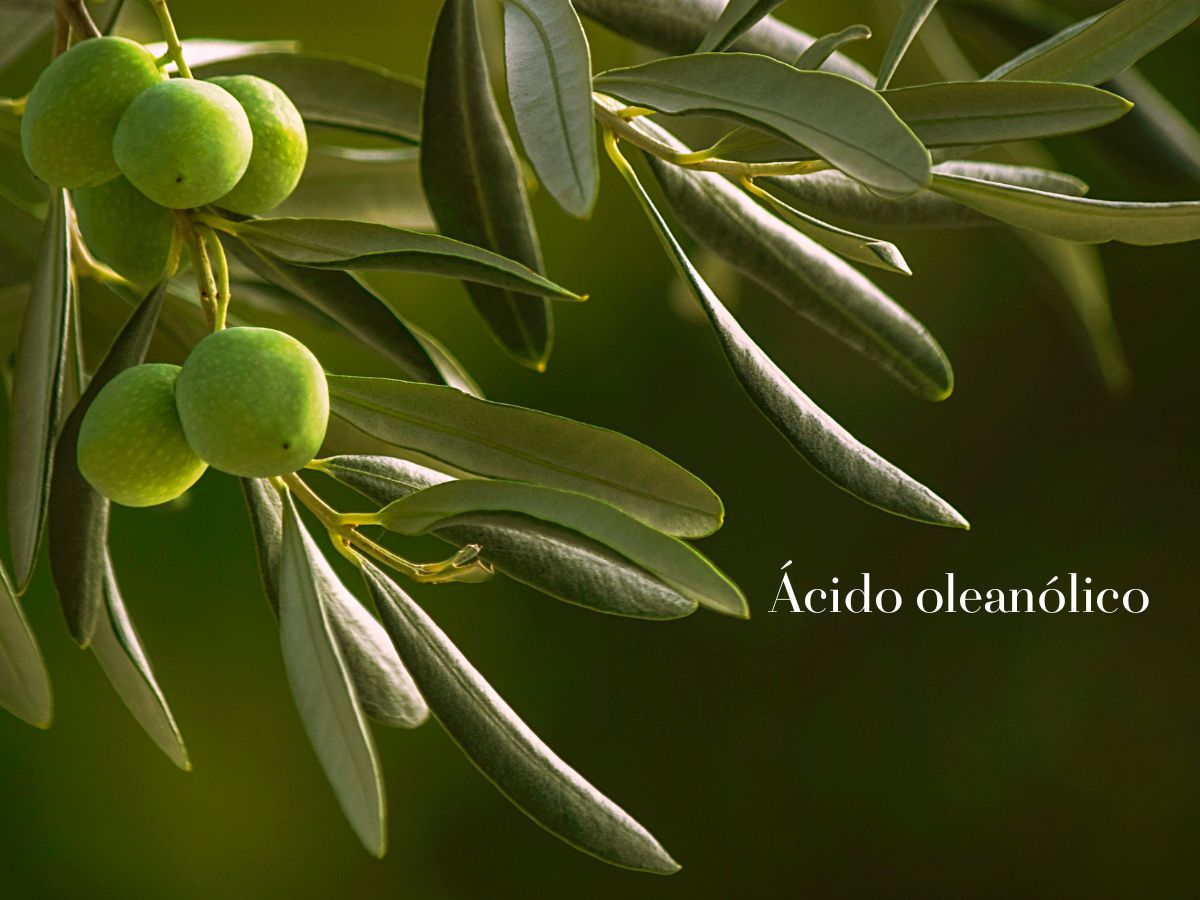
Oleanolic acid is one of those natural compounds that has attracted interest in recent years due to its relationship with plants, the olive tree, cosmetics, and health research. Although its name may sound technical, it is closer to everyday life than it seems: it is found in leaves, fruits, and waxy coatings of different plant species, including the olive tree.
In the world of extra virgin olive oil, it is important not to confuse it with oleic acid. Oleic acid is a monounsaturated fat that is very abundant in olive oil. Oleanolic acid, on the other hand, is a natural triterpene present in different parts of the plant, especially in leaves and plant skins.
Its interest is not only in nutrition. It is also being studied in cosmetics, hair health, metabolism, and protection against oxidative stress. Even so, we must be clear: oleanolic acid should not be presented as a medicine or a miracle solution. It is a bioactive compound with potential, but many of its applications still depend on studies, dosage, formulation, and context of use.
What is oleanolic acid
Oleanolic acid is a natural compound belonging to the group of pentacyclic triterpenes. Plants produce this type of substance as part of their defense and protection mechanisms. In many cases, they appear on the surface of leaves and fruits, forming part of the waxy layer that helps protect them against the sun, water loss, microorganisms, and external aggressions.
In the olive tree, it has been identified in leaves, olives, and other plant tissues. That is why oleanolic acid connects very well with olive-growing culture: not only the oil is of interest, but also the tree, the leaf, the fruit, and the compounds that make the olive tree such a resilient plant.
From a chemical point of view, it is a molecule that is not very soluble in water. This is important because it affects its absorption and its use in foods, supplements, or cosmetics. It is not enough for a substance to have potential in the laboratory; how it is formulated and how it reaches the body or the skin also matters.
Properties of oleanolic acid
The most studied properties of oleanolic acid are related to its possible antioxidant, anti-inflammatory, and cell-protective activity. Its role in metabolic pathways related to lipids, glucose, and oxidative stress is also being investigated.
In simple terms, it is being studied because it may interact with processes that affect cellular aging, inflammation, metabolism, and tissue protection. This does not mean that taking or applying it guarantees those effects in every person.
Current research points to several fields of interest:
-
Protection against oxidative stress.
-
Modulation of inflammatory processes.
-
Support for the skin's barrier function.
-
Interest in cosmetic formulas.
-
Possible role in hair health.
-
Research on fat and glucose metabolism.
Its value lies in its biological potential, not in absolute promises.
Main benefits of oleanolic acid
Talking about the benefits of oleanolic acid requires precision. There are laboratory studies, animal models, cosmetic formulations, and some human trials, but not everything has the same level of evidence.
That is why it is appropriate to talk about potential benefits or studied uses, not guaranteed effects.
For health
Oleanolic acid is being researched for its possible relationship with metabolic, cardiovascular, liver, and inflammatory health. Some studies link it to mechanisms related to cellular oxidation and inflammation, two processes present in many chronic disorders.
Its bioavailability has also been studied when formulated in olive oil. This is interesting because, as a molecule with low water solubility, the fatty environment may favor its transport and absorption.
In a Mediterranean diet, the focus is not on isolating a compound and making it the absolute protagonist. The real value lies in the whole: extra virgin olive oil, vegetables, legumes, fruits, nuts, fish, whole grains, and minimally processed foods.
Oleanolic acid may be part of the scientific interest in the olive tree, but it does not replace a healthy diet or medical treatment.
For the skin
In cosmetics, oleanolic acid is used as a skin conditioning ingredient. Its interest is related to skin protection, indirect hydration, barrier function, and care against external aggressions.
The skin is exposed to solar radiation, pollution, temperature changes, and water loss. That is why cosmetics seek ingredients that help keep it in good condition. In this context, oleanolic acid is studied for its relationship with antioxidant and anti-inflammatory mechanisms.
It may appear in creams, serums, lotions, or anti-aging formulas. Its presence does not make a product miraculous, but it can add value within a well-designed formula.
For skin, it is not just the ingredient that matters: concentration, the complete formula, and consistency of use are important.
For hair
Oleanolic acid is also used in hair products, especially in formulas aimed at the scalp and weakened hair. It is often combined with other actives such as apigenin, biotinyl tripeptide-1, caffeine, or other cosmetic ingredients.
Its interest in hair care is related to follicle care, scalp balance, and research on pathways associated with hair miniaturization. Some formulas include it for its possible relationship with the inhibition of 5-alpha reductase, an enzyme involved in hormonal processes linked to androgenetic alopecia.
Even so, exaggerated messages should be avoided. A cosmetic with oleanolic acid does not guarantee hair growth nor does it replace a dermatological evaluation. Hair loss can have many causes: genetics, stress, nutritional deficiencies, hormonal changes, medications, illnesses, or scalp problems.
Where is oleanolic acid found?
Oleanolic acid is found in many plants. Some of its best known natural sources are: olive leaves, olives, grape skin, apple, basil, rosemary, thyme, calendula, and some medicinal plants.
In the olive sector, the olive leaf is of special interest. During pruning and work in the oil mill, large amounts of leaves are generated, which have traditionally been considered a by-product. Today, however, they are being studied for their content of bioactive compounds, including polyphenols, oleuropein, and oleanolic acid.
This opens up an interesting line: the olive tree not only produces oil, but also a plant material with value for research, cosmetics, and possible functional applications.
What does oleanolic acid do?
Oleanolic acid acts as a bioactive compound. In the plant, it fulfills a protective function. In the human body or on the skin, its interest is being studied for its ability to interact with processes related to oxidation, inflammation, metabolism, and cellular protection.
Put simply, it can contribute to certain cosmetic or nutraceutical formulas having a more complete action. But its effect depends on several factors:
-
Amount used.
-
Chemical form.
-
Extract purity.
-
Type of formula.
-
Bioavailability.
-
Route of use: oral, topical, or hair.
-
Person's health status.
That is why it should not be interpreted as a universal ingredient. Oleanolic acid does a lot in research, but in real use each product and each context must be evaluated.

Leave a comment
This site is protected by hCaptcha and the hCaptcha Privacy Policy and Terms of Service apply.