
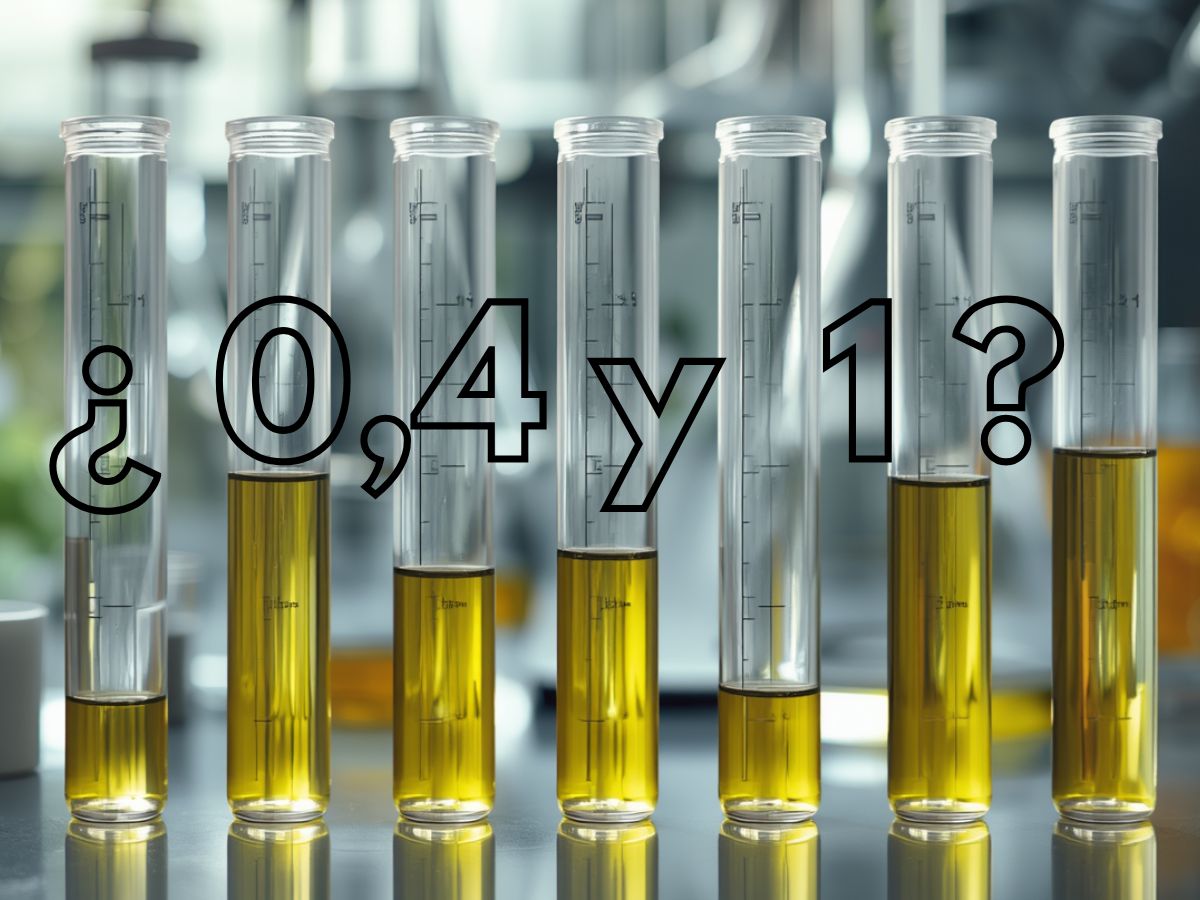
What is the difference between 0.4 and 1 olive oil?
One of the main questions related to olive oil is the difference between 0.4 and 1 olive oil, which are the two most demanded and the ones we usually have in our homes, both allowing us to enjoy all the benefits of olive oil.
And, since we know that understanding the particularities of each will help you choose the best option according to your tastes and needs, at Olivarte we are going to make a comparison between 0.4 and 1 olive oil with the aim of resolving your doubts and helping you make a decision.
If you have ever seen these numbers on the label and didn't know what they referred to, take note and discover the difference between 0.4 olive oil and 1 olive oil, what the acidity level implies, and which might be the best option depending on the use you want to give it. On our blog, we also explain the difference between virgin and extra virgin olive oil.
What do the degrees in olive oil mean?
Before starting the comparison between 0.4 VS 1 olive oil, it is important to know that these numbers refer to the free acidity level, a chemical parameter that indicates the amount of free fatty acids present in the oil. This acidity is expressed as a percentage, but in most cases it is indicated as "degrees."
Thus, when we talk about 0.4 degree olive oil, we refer to an oil with a maximum free acidity of 0.4%, while the acidity of 1 degree olive oil can reach up to 1%.
It is important to clarify that acidity is not directly related to flavor, but to the oil's production process and its state of preservation. An oil with low acidity usually means it is produced from olives in the best conditions.
0.4 olive oil vs 1 olive oil: what changes?
The main difference between 0.4 and 1 olive oil lies in the intensity of flavor and the degree of refining. Despite their differences, both belong to the category of refined olive oil, which is obtained after a refining process of lampante oil (not suitable for direct consumption),
to which a small percentage of extra virgin or virgin olive oil is then added to provide aroma and flavor.
To make it easier for you to differentiate them, we show you a quick comparison between 0.4 and 1 olive oil:
box
0.4 degree olive oil: smoothness and versatility
With a maximum acidity level of 0.4%, generally, this type of oil is characterized by having a milder flavor and a delicate aroma, making it a very versatile option in the kitchen.
These are the most common uses of 0.4 olive oil:
• Dressing salads and raw vegetables.
• Preparing mild sauces like mayonnaise or delicate emulsions.
• Cooking dishes slowly where a subtle olive oil flavor is desired.
• Frying at moderate temperatures.
It is important to highlight that, within the classification of olive oil types, "0.4" usually corresponds to a refined olive oil with the addition of virgin or extra virgin olive oil to improve its flavor and aroma.
1 degree olive oil: fuller flavor
On the other hand, olive oil with "1" degree of acidity has a maximum free fatty acid content of 1%. This implies that, generally, it will have a more pronounced flavor and a more intense aroma compared to 0.4 olive oil.
1 degree olive oil is ideal for:
• Dishes where a stronger olive oil flavor is desired, such as stews, braises, or sautés.
• More intense dressings or to accompany breads.
• Some frying.
Like 0.4 olive oil, 1 degree olive oil is usually a refined olive oil to which virgin or extra virgin olive oil is added.
Which olive oil is better: 0.4 or 1?
Once we know the differences between both, the eternal question remains: which is better, 0.4 or 1 olive oil? The reality is that neither is objectively better than the other; it all depends on the use and personal preferences. Here is our opinion:
• If you are looking for a more neutral oil, with little flavor that does not alter the taste of foods (for example, for baking or mayonnaise), 0.4 degree olive oil is ideal.
• If you prefer an oil with a bit more character, that adds a bit more flavor in frying or sautéing, 1 degree olive oil is a good option.
Although it may seem very subtle, the reality is that the flavor difference between 0.4 and 1 olive oil is totally noticeable, especially in raw or lightly cooked preparations.
In summary, the difference between 0.4 and 1 degree olive oil lies in the acidity level, refining, and flavor intensity, both being excellent options for everyday use, although the choice will depend on what you are looking for.


Leave a comment
This site is protected by hCaptcha and the hCaptcha Privacy Policy and Terms of Service apply.